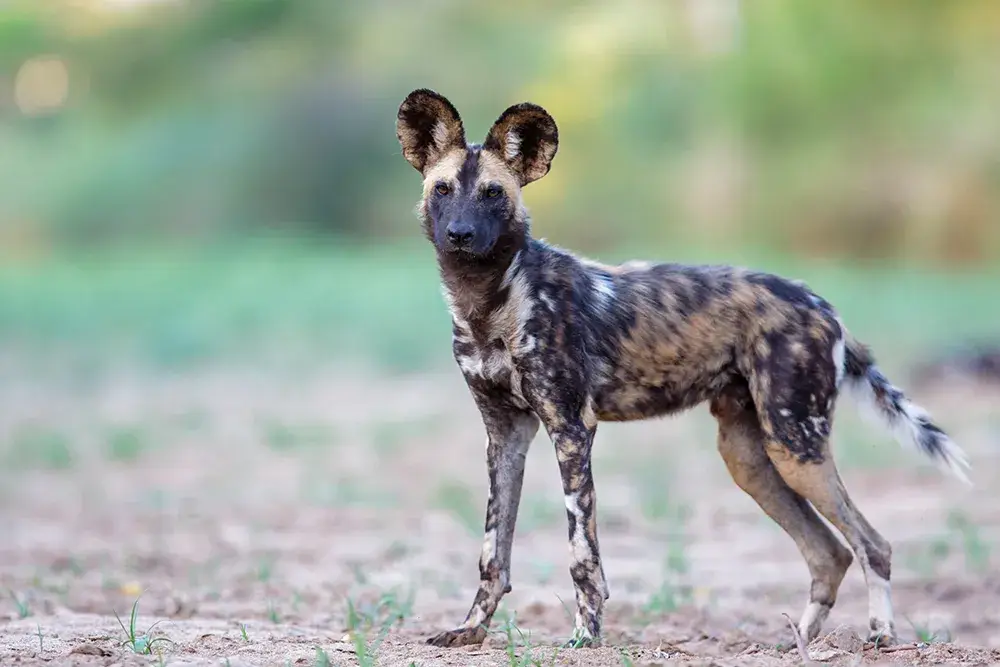
Endangered species remind us of the delicate balance that sustains life in the wild. In the Kruger region and Mjejane Private Game Reserve, one of the most compelling examples is the African wild dog—an animal whose survival depends on vast landscapes, strong social bonds, and ongoing conservation efforts. Rarely seen but deeply significant, they represent both the fragility and resilience of Africa’s ecosystems.
Africa’s Most Efficient Hunter
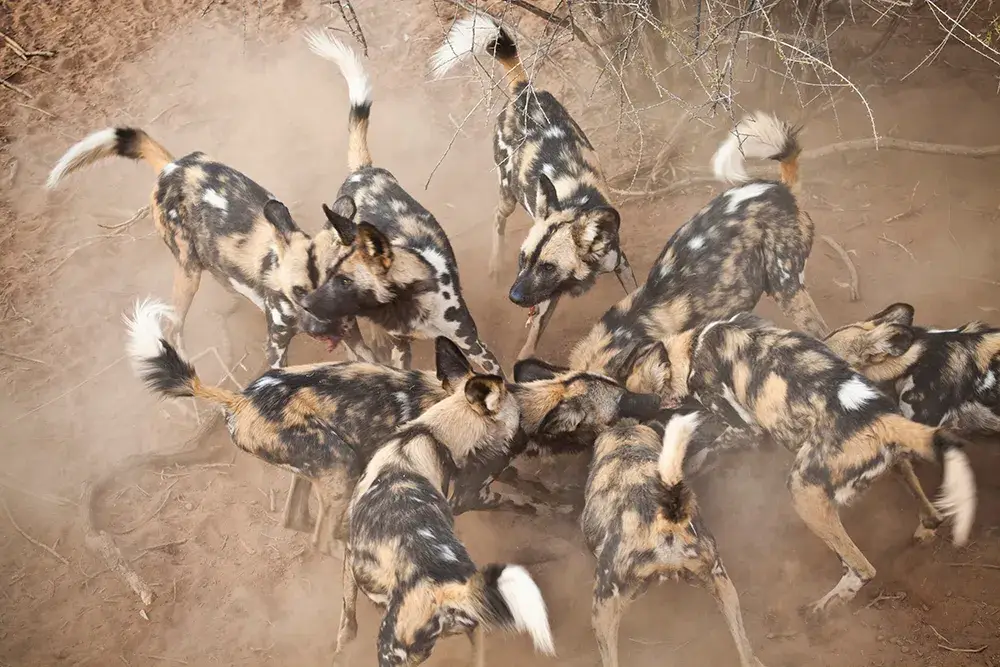
African wild dogs are renowned for their extraordinary hunting success rate, often far surpassing other large predators. Their strategy relies on teamwork, stamina, and coordination, allowing them to pursue prey over long distances until it can no longer keep up. In the open plains and woodland areas of the Kruger, these hunts are fast-paced and intense, showcasing a level of cooperation that is unmatched in the animal kingdom.
Strength in the Pack
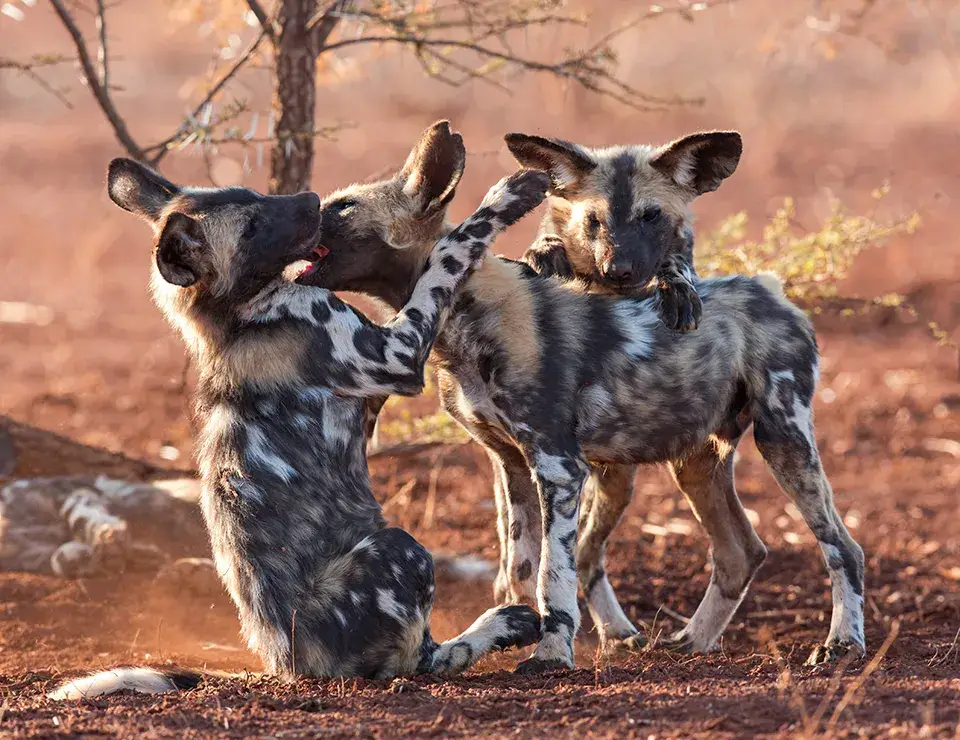
At the heart of every wild dog sighting is the story of the pack. These animals live in tightly bonded family groups led by a dominant pair, with each member playing a role in the survival of the whole. From caring for pups to assisting injured packmates, their social structure is built on cooperation and loyalty. In Mjejane and the greater Kruger, witnessing a pack interact offers a rare glimpse into one of nature’s most sophisticated social systems.
Constant Motion Across the Landscape
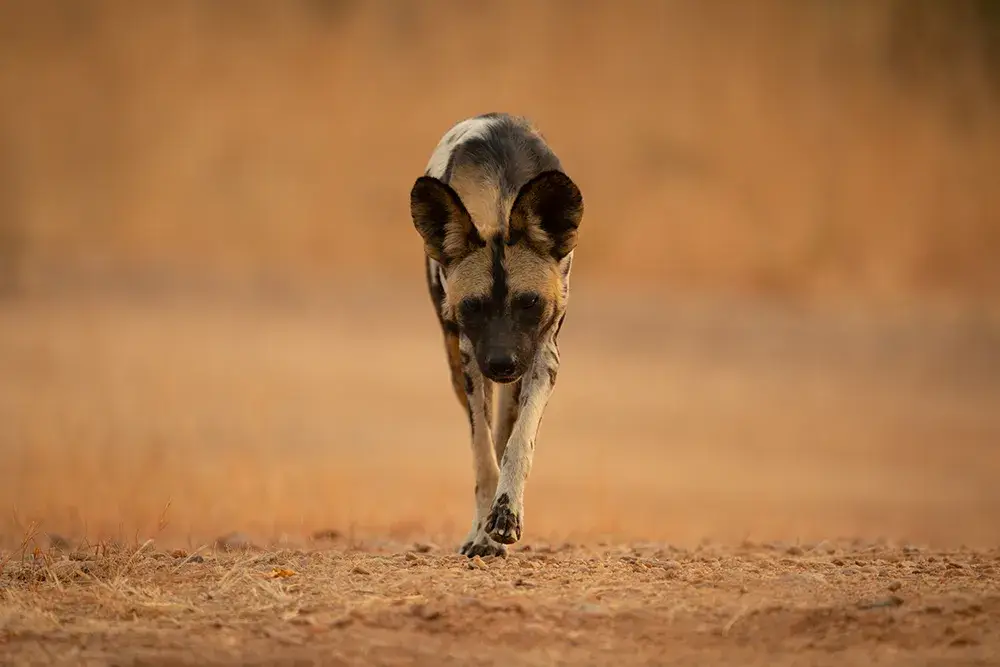
Unlike many other predators, African wild dogs are constantly on the move. They cover large territories in search of food, often travelling many kilometres in a single day. This wide-ranging behaviour makes sightings unpredictable but incredibly rewarding. When a pack passes through Mjejane, it brings a sense of excitement and urgency, as these fleeting moments are never guaranteed to last.
Challenges to Survival
Despite their adaptability and skill, African wild dogs face significant threats. Habitat fragmentation, human-wildlife conflict, and disease have all contributed to their declining numbers. Their need for large, connected landscapes makes protected areas like the Kruger National Park and surrounding reserves essential for their continued survival.
Guardians of Balance
Wild dogs play a crucial role in maintaining ecological balance. By primarily targeting weaker or vulnerable prey, they help keep herbivore populations healthy and ecosystems functioning as they should. Their presence is an indicator of a thriving wilderness—one where predator and prey exist in natural harmony.
A Rare Privilege to Witness
Encounters with African wild dogs are among the most unforgettable experiences in the bush. Whether glimpsed trotting along a road at sunrise or resting briefly before the next hunt, their energy and unity leave a lasting impression. In Mjejane, these moments are a reminder of why protecting endangered species matters—not just for the animals themselves, but for the future of the wild places they call home.