
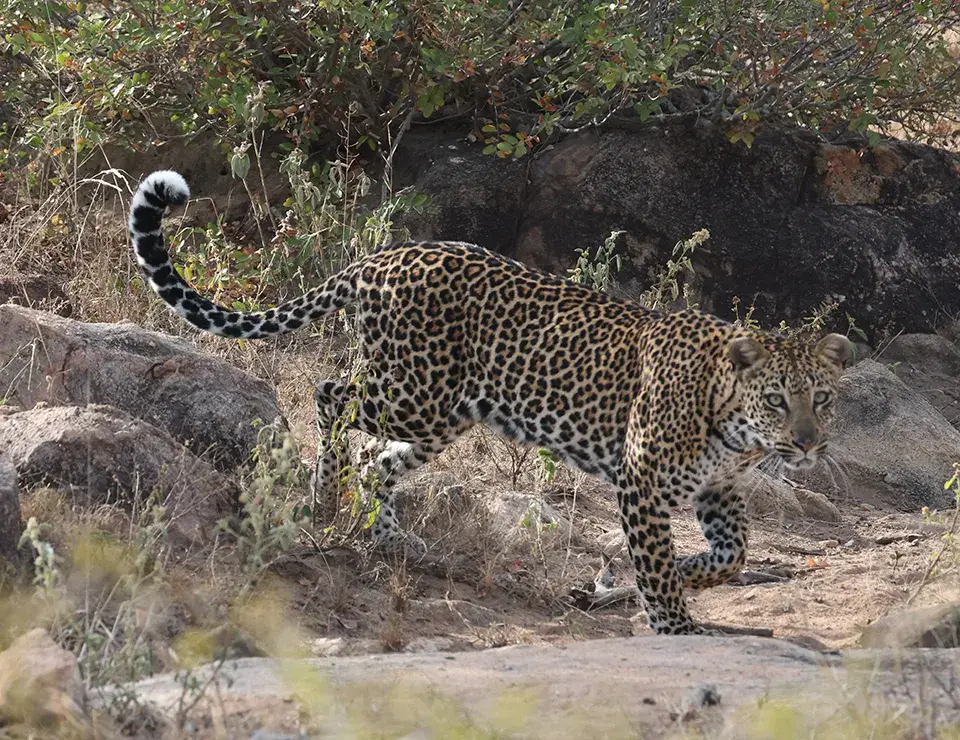
Leopards are among the most elusive and captivating predators roaming the Mjejane Private Game Reserve and the greater Kruger region. Often unseen but always present, they move like shadows through the dense riverine vegetation and open savannahs, embodying a quiet power that defines the African wilderness. Guests may not always spot them, but knowing they are there adds a sense of mystery to every game drive.
Masters of Adaptation
One of the reasons leopards thrive in this environment is their remarkable adaptability. Found in both the Mjejane game reserve and the Kruger National Park, they comfortably navigate a range of habitats—from thick bushveld to rocky outcrops and riverbanks. Their diet is equally flexible, allowing them to hunt anything from small rodents to medium-sized antelope. This versatility ensures their survival in an ecosystem that is constantly changing.
The Art of Stealth Hunting
Leopards rely on patience and precision rather than brute force. They stalk their prey silently, using natural cover to get as close as possible before launching a short, explosive attack. In the Mjejane area, sightings often occur near water sources or along game paths, where prey is abundant. Their ability to hoist kills into trees not only protects their food from scavengers but also offers one of the most iconic images of African wildlife.
A Solitary Existence
Unlike lions, leopards are solitary animals. Each individual maintains its own territory, which may overlap slightly with others but is fiercely defended. In the Mjejane and Kruger landscapes, this independence means that every sighting feels personal and rare. A single leopard moving through its territory tells a story of survival, resilience, and quiet dominance.
Tracks, Signs, and Subtle Clues
Even when a leopard remains hidden, there are signs for those who know where to look. Fresh tracks on a dusty road, alarm calls from impalas, or the sudden silence of birds can all indicate a leopard’s presence. Experienced guides in the Mjejane area often read these subtle cues, turning an ordinary drive into an exciting tracking experience.
Conservation and Coexistence
Leopards face ongoing challenges, from habitat loss to human-wildlife conflict. Protected areas like Mjejane and the greater Kruger National Park play a vital role in safeguarding their future. By preserving natural habitats and supporting conservation initiatives, these areas ensure that leopards continue to roam freely, maintaining the delicate balance of the ecosystem.
A Rare and Unforgettable Encounter
A leopard sighting is never guaranteed, which makes each encounter truly special. Whether glimpsed draped over a tree branch or crossing the road at dusk, the experience lingers long after the moment has passed. In Mjejane, these rare sightings are a reminder of the untamed beauty of the bush and the privilege of witnessing it firsthand.