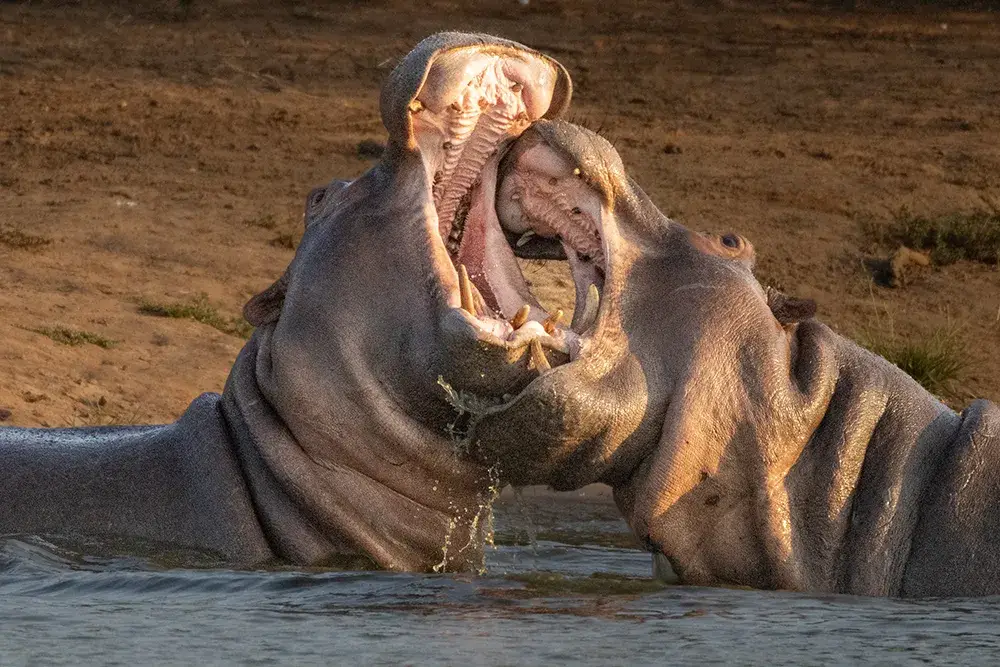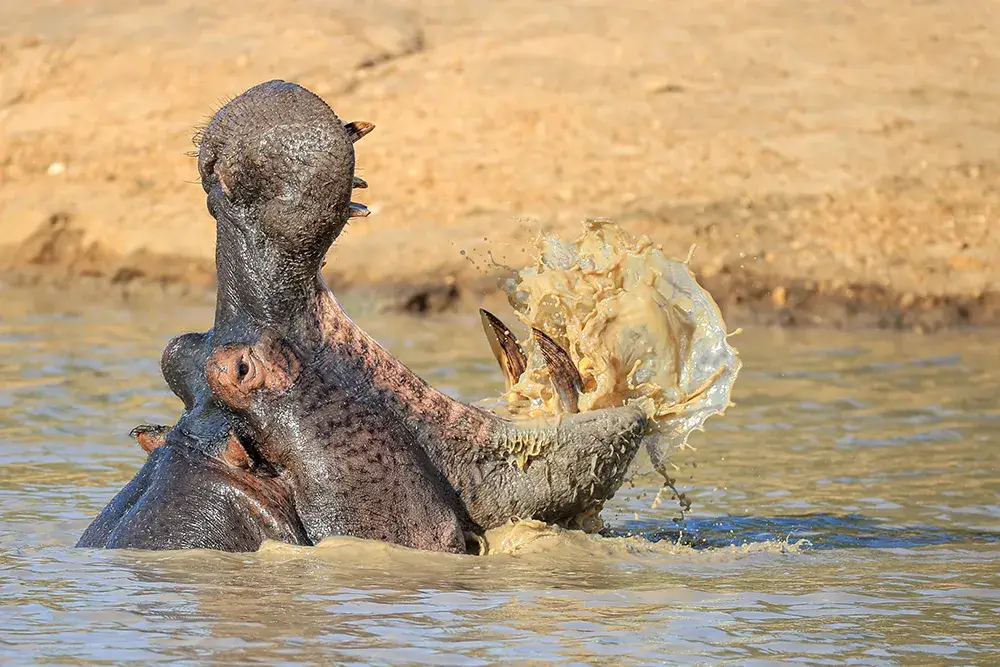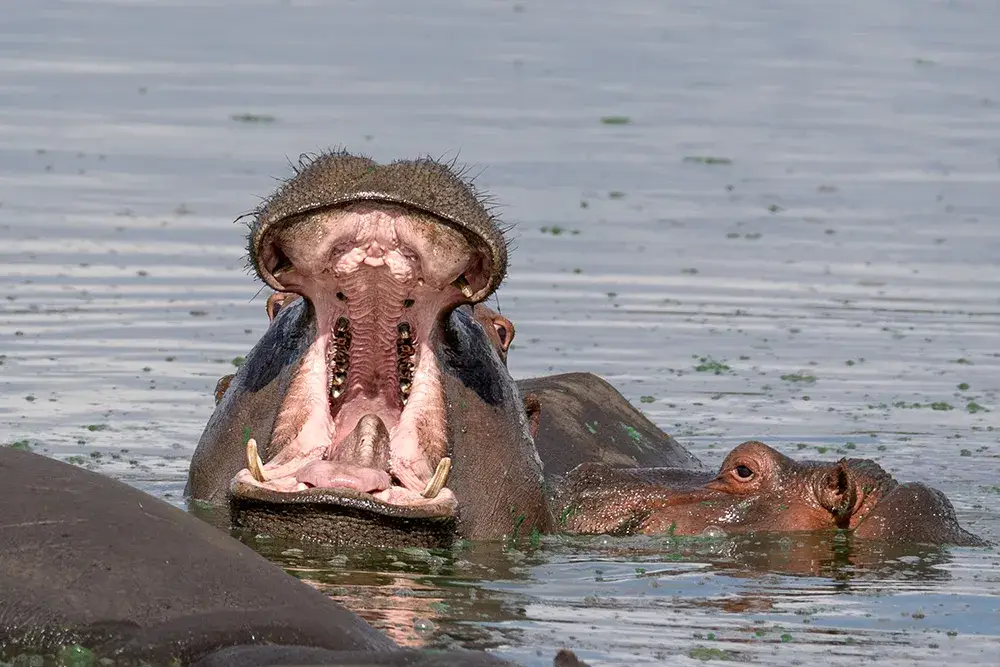
Every year on World Hippopotamus Day, we pause to celebrate one of Africa’s most iconic — and often misunderstood — residents: the hippopotamus. Here at Fifty-Five Mjejane, set along the life-giving Crocodile River, hippos are not just part of the landscape — they are part of the rhythm of daily life in the bush.
Gentle Giants of the River
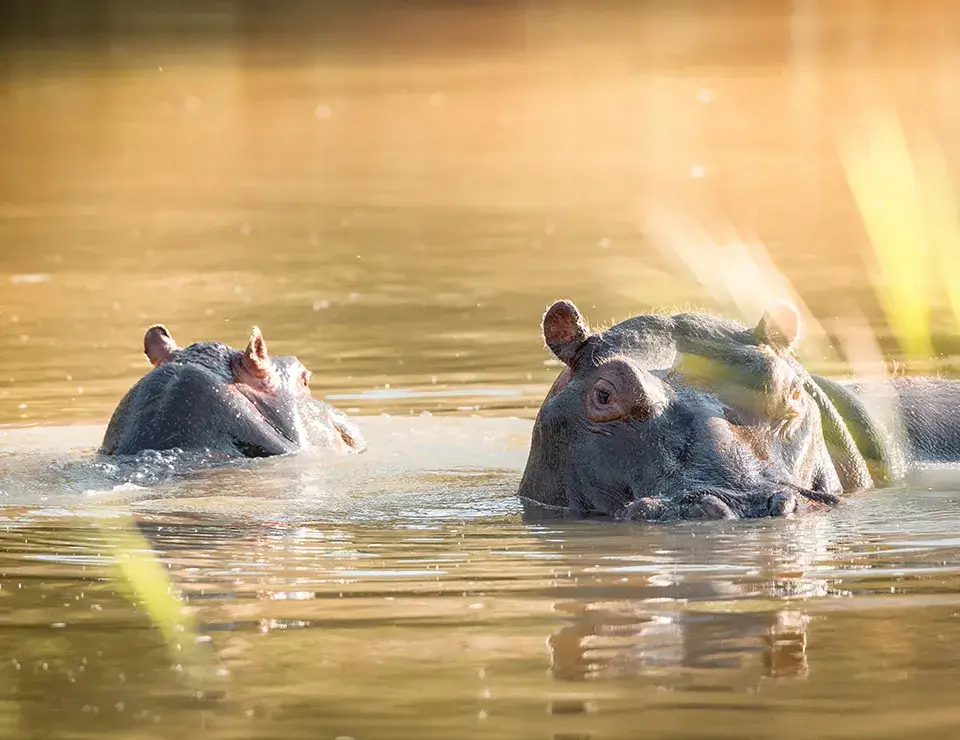
Though famously powerful, hippos are surprisingly graceful in their own way. Spending most of their days submerged in water to stay cool, they emerge at dusk to graze, shaping the ecosystems around them. Their presence plays a vital role in maintaining healthy river systems, supporting both aquatic and land-based life.
From the comfort of Fifty-Five Mjejane, guests are often treated to unforgettable sightings — a ripple in the water, a pair of watchful eyes at sunset, or the deep, echoing calls that drift across the river after dark.
Why Hippos Matter
Hippos are considered a keystone species, meaning their behaviour directly influences the health of their environment. As they move between land and water, they transport nutrients that support fish populations and river biodiversity. Protecting hippos means protecting entire ecosystems.
Sadly, hippos face increasing threats from habitat loss, water scarcity, and human conflict. World Hippo Day serves as a reminder of the importance of conservation efforts within protected areas like Greater Kruger.
A Privilege to Protect
At Fifty-Five Mjejane, we are privileged to share space with these remarkable animals. Every sighting is a reminder of why responsible tourism matters — allowing guests to experience wildlife ethically while contributing to the preservation of these natural habitats.
On this World Hippo Day, we celebrate the hippo not only for its strength and character, but for the balance it brings to the wild spaces we cherish.
Whether you’re watching the river at sunrise or listening to the bush come alive at night, the presence of hippos is a powerful reminder that you are truly immersed in the heart of the African wilderness.