
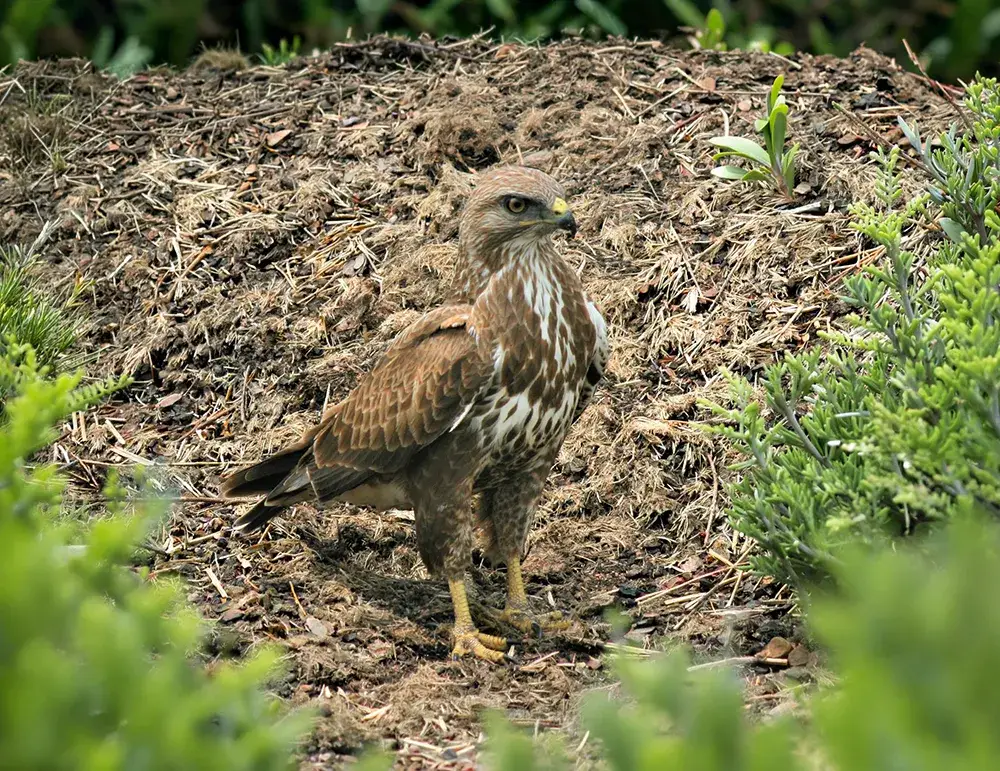
At Fifty-Five Mjejane, every day in the bush offers a lesson in balance — and on World Buzzards Day, we pause to appreciate the quiet custodians of our skies. Often seen circling high above the savanna or perched watchfully in riverine trees, buzzards play a vital role in keeping ecosystems healthy and thriving.
Within the greater landscape of Kruger National Park, these birds of prey are a familiar, if sometimes overlooked, presence. Their sharp eyesight and patient hunting strategies make them masters of efficiency in the wild.
The Seasonal Traveller: Steppe Buzzard
The most commonly sighted buzzard in the Kruger region is the migratory Steppe Buzzard. Arriving in southern Africa during the warmer months, these raptors journey thousands of kilometres from breeding grounds in Eurasia to spend the summer here.
In flight, they are often seen soaring on thermals, their broad wings and slightly fanned tails perfectly adapted for energy-efficient travel. Their plumage varies in tone, but many display warm brown hues that blend beautifully with the Lowveld landscape. Guests on game drives frequently spot them scanning open areas for insects, small mammals, and reptiles.
Their annual migration is a reminder of just how interconnected ecosystems are — linking continents through instinct and survival.
The Resident Hunter: Jackal Buzzard
Less commonly sighted, yet striking in appearance, is the Jackal Buzzard. A resident species in South Africa, this bold raptor is known for its rich chestnut body and contrasting dark wings.
While more frequently associated with mountainous regions, individuals are occasionally observed within the broader Kruger landscape. Their presence adds to the diversity of raptor life that calls this area home year-round. With a powerful build and confident flight, the Jackal Buzzard is a formidable hunter capable of taking on larger prey than many would expect.
The Watchful Perch: Lizard Buzzard
Another infrequent but exciting sighting is the Lizard Buzzard. Smaller and more compact than its relatives, this species is often identified by its distinctive single dark stripe down the throat.
True to its name, it favours reptiles — often seen perched upright on exposed branches, scanning the ground below for movement. Unlike the soaring Steppe Buzzard, the Lizard Buzzard tends to hunt from a stationary vantage point, making patience its greatest asset.
Spotting one is always a memorable moment for keen birders visiting the reserve.
Guardians of the Ecosystem
Buzzards may not always command the same attention as larger predators, but their ecological importance cannot be overstated. By controlling rodent and insect populations and assisting in natural clean-up processes, they contribute to the delicate equilibrium of the bushveld.
On World Buzzards Day, we celebrate these remarkable raptors and the role they play in the greater Kruger ecosystem. The next time you find yourself looking skyward during a stay at Fifty-Five Mjejane, take a moment to follow the silhouette gliding overhead — it may just be one of these extraordinary birds continuing an ancient rhythm of survival above the African plains.