
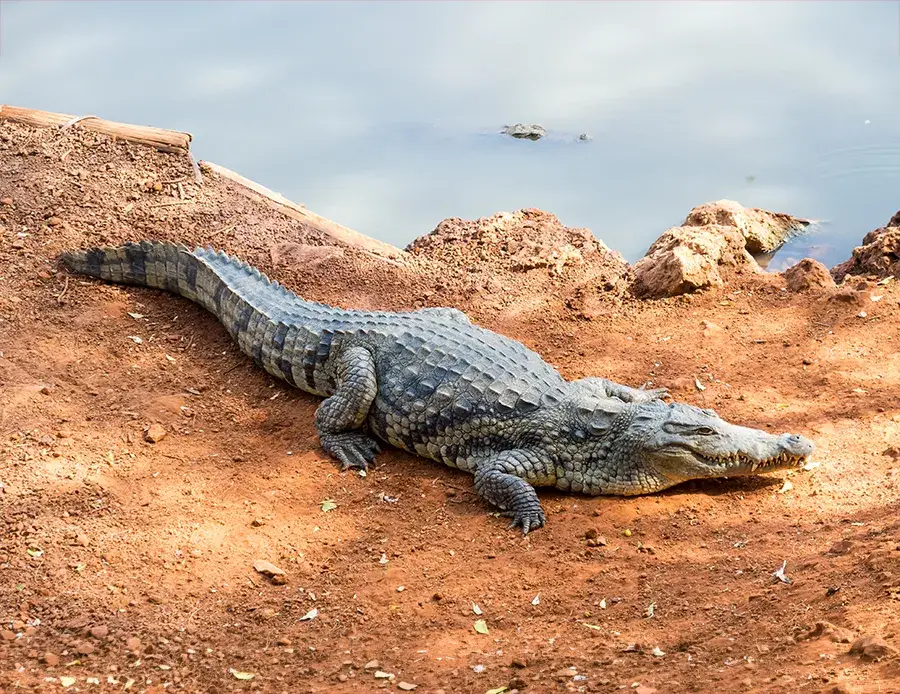
For many guests at Fifty-Five Mjejane, there’s nothing quite as thrilling as spotting a crocodile basking along the banks of the Crocodile River. Motionless and seemingly prehistoric, these remarkable reptiles have captured human fascination for millions of years. On World Crocodile Day, we celebrate one of Africa’s most iconic predators and the important role it plays in maintaining the delicate balance of the ecosystem.
More Ancient Than You Might Think
Crocodiles are among the oldest surviving animals on Earth, with ancestors that lived alongside dinosaurs over 200 million years ago. While countless species have come and gone throughout history, crocodiles have remained remarkably successful, evolving into highly efficient predators perfectly suited to life in rivers, wetlands, and waterways across Africa.
Masters of Patience
One of the reasons crocodiles have survived for so long is their incredible ability to conserve energy. Unlike mammals, crocodiles can remain still for hours, sometimes even days, waiting for the perfect opportunity to strike. This patience allows them to thrive in environments where food can be unpredictable. A crocodile’s seemingly lazy behaviour is actually a carefully perfected survival strategy.
The Crocodile River's Famous Residents
The Crocodile River, which forms the southern boundary of the Kruger National Park and flows past Mjejane Game Reserve, provides ideal habitat for Nile crocodiles. The river’s deep pools, sandy banks, and abundant wildlife create the perfect conditions for these reptiles to flourish. Guests enjoying the views from the lodge or setting out on game drives are often fortunate enough to spot crocodiles sunning themselves along the riverbanks or gliding silently through the water.
Built for Survival
Every feature of a crocodile has been designed by nature for efficiency. Their powerful tails propel them through the water with surprising speed, while their eyes, ears, and nostrils sit high on their heads, allowing them to remain almost completely submerged while observing their surroundings. Combined with one of the strongest bites in the animal kingdom, these adaptations make crocodiles formidable predators and expert survivors.
More Than Just Predators
Although crocodiles are often viewed solely as hunters, they play an essential role in maintaining healthy river ecosystems. By helping regulate fish populations and removing weak or sick animals, they contribute to the natural balance of their environment. Their presence is often a sign of a thriving and functioning water system.
Celebrating the Wild Wonders of Mjejane
World Crocodile Day offers an opportunity to appreciate not only these extraordinary reptiles but also the rich biodiversity that makes the Mjejane such a special destination. Every creature, from the largest elephant to the most elusive crocodile, plays a role in the story of the bush. As guests immerse themselves in the sights and sounds of the African wilderness, they become part of a landscape where ancient survival stories continue to unfold every day.